
1. What is Dark Web Wallet Screening?
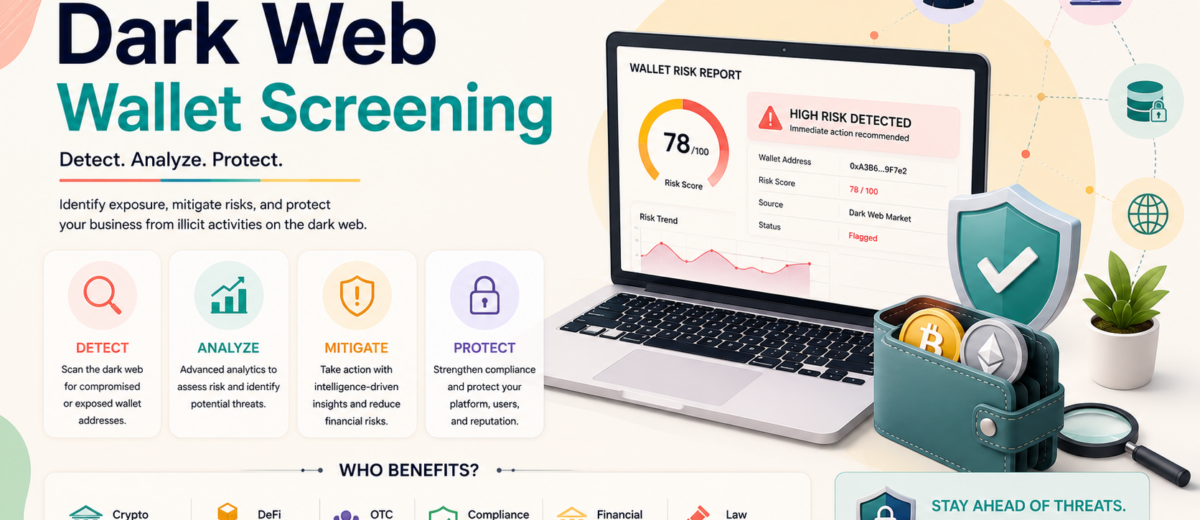
Dark Web Wallet Screening is the process of analyzing cryptocurrency wallet addresses against databases of wallets associated with darknet marketplaces, ransomware groups, scams, sanctioned entities, mixers, and other illicit activities. It helps organizations identify and mitigate financial crime risks before processing transactions.
2. What is a Cryptocurrency Wallet?
A cryptocurrency wallet is a digital tool that stores public and private keys, enabling users to send, receive, and manage cryptocurrencies. Wallets may be custodial or non-custodial and can support one or multiple blockchain networks.
3. What is Blockchain Analytics?
Blockchain analytics is the practice of examining blockchain transactions using specialized software to trace the movement of digital assets, identify wallet ownership patterns, detect suspicious activities, and support regulatory compliance and investigations.
4. What is Anti-Money Laundering (AML)?
Anti-Money Laundering (AML) refers to the laws, regulations, policies, and procedures designed to prevent criminals from disguising illegally obtained funds as legitimate income. AML programs in the crypto industry typically include KYC, transaction monitoring, wallet screening, and suspicious activity reporting.
5. What is a High-Risk Wallet?
A high-risk wallet is a cryptocurrency wallet that has been linked, directly or indirectly, to illicit activities such as ransomware attacks, darknet marketplaces, fraud schemes, hacking incidents, sanctions violations, terrorist financing, or money laundering. Transactions involving such wallets require enhanced due diligence.
6. What is a Virtual Asset Service Provider (VASP)?
A Virtual Asset Service Provider (VASP) is a business that provides services involving virtual assets, such as cryptocurrency exchanges, custodians, wallet providers, brokers, or transfer services. VASPs are typically required to comply with AML, KYC, and other regulatory obligations.
7. What is Transaction Monitoring?
Transaction monitoring is the continuous process of reviewing cryptocurrency transactions to identify unusual patterns, suspicious behavior, or interactions with sanctioned or high-risk wallet addresses. It enables organizations to detect potential financial crimes and meet regulatory reporting obligations.
Article
The meteoric rise of cryptocurrency has transformed the landscape of global finance, facilitating speedier, borderless, and decentralized transactions. At the same time, the very features that make digital resources enticing also make them subject to abuse by thieves. Cryptocurrency wallets are often used by cybercriminals, ransomware operators, fraudsters, darknet markets and sanctioned businesses to shift and hide illicit monies. This has increased the demand on enterprises working in the digital asset ecosystem to identify and block transactions with high-risk wallets. One of the best ways to alleviate these concerns is dark web wallet screening. By detecting wallets related to unlawful activity, crypto firms can improve their Anti-Money Laundering (AML) processes, meet regulatory obligations, and safeguard their platforms against financial crime. As global regulators increase their scrutiny of Virtual Asset Service Providers (VASPs), dark web wallet screening is now a must-have component of current day crypto compliance.
Dark Web Wallet Scanning, What Is It?
Dark web wallet screening is the practice of checking cryptocurrency wallet addresses against databases of wallets linked with darknet marketplaces, ransomware groups, phishing campaigns, scams, sanctioned entities, terrorist financing, stolen funds, mixers and other high-risk activities. Blockchain analytics platforms are regularly watching public blockchain transactions and building sophisticated clustering algorithms to discover wallets tied to illegal networks. If a wallet used in a transaction is known to be a high-risk address or shows suspect transaction behavior, compliance teams can examine activities, conduct extra due diligence, block the transaction where applicable, or file regulatory filings as needed by law.
Unlike conventional financial institutions, cryptocurrency companies have to screen not only customer names against sanctions lists but also blockchain wallet addresses, as the wallet becomes the main identification used in blockchain transactions.
The Importance of Screening Dark Web Wallets
The crypto ecosystem executes millions of transactions on several blockchains daily. Blockchain transactions are public and transparent, but to know if a wallet is owned by a valid person or a criminal organization, you need sophisticated blockchain intelligence.
Dark web wallet screening enables companies to identify their exposure to illicit payments before they hit their platform. This is particularly crucial since accepting payments from wallets associated with ransomware, hacking incidents or sanctioned entities exposes a company to regulatory inquiries, reputational damage and hefty financial fines. Screening also gives companies the opportunity to show they have developed a risk-based compliance strategy. Regulators are increasingly requiring Virtual Asset Service Providers to have robust transaction monitoring systems that can detect questionable blockchain activity in real time.
Expectations of Regulators
The Financial Action Task Force (FATF) Recommendations compel nations to regulate Virtual Asset Service Providers and to take measures to combat money laundering and terrorist financing. Many countries such as the European Union under the Markets in Crypto-Assets (MiCA) Regulation, the United Kingdom, Singapore, Dubai and a number of other financial hubs demand regulated businesses to have efficient AML and transaction monitoring processes. The rules range from jurisdiction to jurisdiction, but there is a general expectation that crypto firms should have mechanisms in place to detect high-risk wallets, monitor blockchain transactions and escalate suspicious conduct for further inquiry. Dark web wallet screening supports these duties by delivering actionable intelligence that strengthens traditional Know Your Customer (KYC) and Customer Due Diligence (CDD) processes.
Advantages of Dark Web Wallet Screening
There are various operational and compliance advantages of using wallet screening.
Organizations can check for wallets affiliated with ransomware groups before accepting deposits, lowering the odds of assisting unlawful transactions. Screening also detects money from exchange hacks, phishing, investment scams, darknet marketplaces, and sanctioned businesses. On the compliance side, wallet screening improves AML controls by enabling risk-based decisions. Compliance officers may give risk scores to wallet addresses, initiate enhanced due diligence where appropriate and create audit trails demonstrating regulatory compliance. Businesses also have a stronger reputation and greater confidence from customers. Crypto companies that have good compliance capabilities and effective blockchain monitoring are more likely to work with financial institutions, banking partners, institutional investors and regulators.
How the Dark Web Wallet Screening Works
The screening procedure starts at the moment when a wallet address is sent for analysis. Blockchain analysis platforms check the wallet against vast databases that have millions of known cryptocurrency addresses associated with illegal activity. The system gives alerts about the risk level if the wallet has engaged with darknet markets, ransomware operators, sanctioned entities, fraud schemes or other high-risk services. Modern screening methods additionally review transaction history, exposure ratios, wallet clustering, behavioral tendencies and indirect linkages to criminal enterprises. Compliance teams can then decide whether to proceed with the transaction, whether to ask for more customer verification, or whether to report the activity to the relevant authorities. The need for constant monitoring is just as vital since a wallet initially deemed low risk could later become associated with unlawful activities through later transactions.
Best Crypto Company Tips
Dark web wallet screening can’t be a one-time thing. It should be part of a holistic compliance architecture that includes client onboarding, KYC verification, sanctions screening, transaction monitoring, blockchain analytics, suspicious activity reporting, and employee training. Businesses should have clear internal policies that specify thresholds for risk, escalation procedures and mechanisms for investigating high risk wallets. Compliance teams should frequently examine screening parameters to ensure they match growing regulatory requirements and emerging financial crime typologies. Organizations should also document the outcomes of the screening, the investigations, and the determinations of compliance. This paperwork is important in regulatory audits and shows that the business has taken reasonable steps to detect and prevent financial crime.
Conclusion
As bitcoin use continues to grow, regulators are increasingly looking to proactively prevent financial crime in the digital asset ecosystem. Dark web wallet screening has become an important compliance tool, which allows Virtual Asset Service Providers, exchanges, custodians, payment platforms and financial institutions to detect high-risk wallet addresses before illicit monies enter their systems. By leveraging wallet screening as part of broader AML, KYC, sanctions screening, and blockchain analytics programs, organizations may greatly decrease regulatory risk, increase customer confidence, and protect the integrity of their businesses. In an increasingly regulated crypto environment, dark web wallet screening is not just a good security practice, but a necessary part of responsible and compliant digital asset operations.
Frequently Asked Questions (FAQs)
1. Why is dark web wallet screening important?
Dark web wallet screening helps cryptocurrency businesses identify wallets associated with illicit activities, reducing the risk of processing illegal transactions and strengthening compliance with AML regulations.
2. Who should implement wallet screening?
Cryptocurrency exchanges, custodians, payment processors, Virtual Asset Service Providers (VASPs), fintech companies, financial institutions, NFT marketplaces, and DeFi platforms can benefit from implementing wallet screening as part of their compliance framework.
3. Does wallet screening guarantee that financial crime will be prevented?
No. Wallet screening significantly reduces risk but should be combined with KYC, transaction monitoring, sanctions screening, customer due diligence, and ongoing compliance measures for effective financial crime prevention.
4. How often should cryptocurrency wallets be screened?
Wallets should be screened during customer onboarding, before processing transactions, and continuously throughout the customer relationship, as wallet risk profiles can change over time.
5. Can wallet screening detect exposure to sanctioned entities?
Yes. Modern blockchain analytics platforms can identify wallets linked to sanctioned individuals, organizations, exchanges, and jurisdictions, helping businesses comply with applicable sanctions regulations.
6. Is dark web wallet screening a regulatory requirement?
Many jurisdictions expect regulated crypto businesses to implement risk-based transaction monitoring and blockchain analytics. While specific legal requirements vary, wallet screening is widely regarded as a best practice for AML compliance.
7. What happens if a wallet is identified as high risk?
If a wallet is flagged as high risk, the organization should conduct enhanced due diligence, investigate the transaction, assess the associated risks, and, where required, decline the transaction or file the appropriate regulatory reports in accordance with applicable laws and internal compliance policies.