
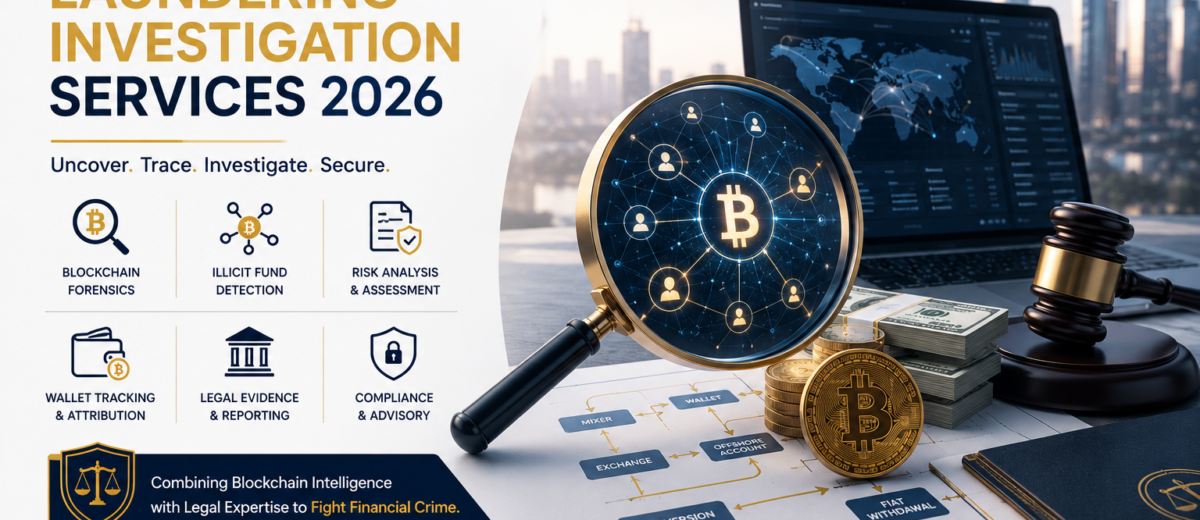
Cryptocurrency has transformed the way value can move across borders, but the same speed, accessibility and global reach that make digital assets attractive can also be exploited for money laundering. Criminals may move illicit funds through multiple wallets, decentralized exchanges, bridges, mixers, privacy-enhancing services and offshore platforms to make the original source harder to identify. FATF continues to identify virtual assets as an important money-laundering and terrorist-financing risk area and has highlighted the need for stronger implementation of AML/CFT controls for virtual-asset service providers.
What Is Crypto Money Laundering Investigation?
Crypto money laundering investigation involves analysing blockchain transactions to determine where suspicious funds originated, how they moved, which wallets and services were involved, and where the funds ultimately went. Unlike traditional financial investigations, blockchain investigations can follow transactions recorded permanently on public ledgers. However, identifying the person behind a wallet generally requires combining blockchain intelligence with additional evidence, such as exchange information, KYC records, communications, websites, transaction patterns and other investigative data. FATF identifies several indicators that can raise money-laundering concerns, including unusual transaction patterns, unexplained transaction size or frequency, anonymity-enhancing technologies, mixers and suspicious source-of-funds activity at blockchain forensics.
How Crypto Money Laundering Investigations Work
A professional investigation typically begins with a wallet address, transaction hash or known suspicious transaction. Investigators then reconstruct the movement of funds across relevant blockchain networks. This can involve:
- Wallet-to-wallet tracing
- Multi-hop transaction analysis
- Cross-chain tracing
- Bridge and decentralized exchange analysis
- Mixer and obfuscation detection
- Exchange exposure identification
- Wallet clustering and attribution
- Risk and sanctions screening
- Open-source intelligence (OSINT)
- Evidence preservation
The objective is not simply to produce a transaction graph. It is to develop an evidence-supported understanding of the flow of funds and the entities or services connected to it. Role of Blockchain Forensics. Modern blockchain forensic platforms can connect transaction intelligence with investigation and evidence workflows. For example, Chain Trace Labs combines multi-chain tracing with case intelligence, evidence preservation, reporting and follow-up actions for professional investigation teams. (Chaintrace Labs)
This becomes particularly important when funds pass through multiple intermediary wallets or services. A transaction that initially appears to lead to an anonymous wallet may eventually expose an exchange deposit, hosted service or other identifiable point of intervention.
Common Crypto Laundering Techniques
Investigators frequently encounter:
- Layering: moving funds through multiple wallets to complicate tracing.
- Mixers: services designed to obscure relationships between source and destination transactions.
- Chain hopping: moving assets between different blockchain networks.
- Bridges: transferring assets between blockchain ecosystems.
- DEX swaps: converting one cryptocurrency into another to complicate the trail.
- Peel chains: repeatedly splitting and transferring portions of funds.
- Exchange deposits: moving illicit funds into centralized platforms where they may ultimately become connected to an identifiable customer.
These techniques do not necessarily make funds untraceable. Rather, they increase the complexity of the investigation and the amount of analysis required.
| Investigation Area | What It Involves |
| Wallet Analysis | Examining wallet activity, balances, transaction history and relationships with other addresses. |
| Transaction Tracing | Following the movement of cryptocurrency across multiple transactions and wallets. |
| Fund Flow Analysis | Reconstructing how suspected illicit funds moved from their original source to their eventual destination. |
| Cross-Chain Investigation | Tracking assets as they move between different blockchain networks using bridges, swaps and other mechanisms. |
| Exchange Identification | Identifying cryptocurrency exchanges or other services that received or processed suspicious funds. |
| Entity Attribution | Connecting blockchain addresses to exchanges, businesses, organisations or other identifiable entities where sufficient evidence exists. |
| Risk & AML Analysis | Assessing transaction patterns and exposure to indicators associated with fraud, sanctions evasion, money laundering or other illicit activity. |
| Evidence Preservation | Recording relevant blockchain data and investigative findings in a structured manner for future review or legal proceedings. |
| Forensic Reporting | Converting blockchain analysis into a clear, documented report showing transaction flows, findings, methodology and supporting evidence. |
Legal and Investigative Reporting
A strong crypto money-laundering investigation should produce more than a blockchain diagram. The final report should clearly explain the methodology, transaction pathways, relevant wallet or service exposure, supporting evidence, assumptions and limitations. For law firms, forensic firms, financial institutions and law-enforcement teams, evidence preservation and a documented chain of handling can be critical. Chain Trace Labs, for example, provides structured investigation records connecting transaction findings with source evidence, review context and subsequent investigative actions. (Chaintrace Labs)
Conclusion
Crypto money laundering investigations require a combination of blockchain analytics, financial investigation, OSINT, entity attribution and evidence management. As regulators continue strengthening AML/CFT requirements for virtual assets, organisations need investigative capabilities that can move beyond simply identifying suspicious transactions and instead reconstruct the complete movement of funds and produce actionable, defensible findings. For victims, law firms, compliance teams, forensic investigators and law-enforcement agencies, the objective is ultimately the same: follow the money, identify meaningful leads, preserve the evidence and determine what action can realistically be taken at crypto asset tracing.
Key Definitions in Crypto Money Laundering Investigations
- Crypto Money Laundering
The process of disguising the origin of cryptocurrency obtained through illegal activities by moving it through wallets, exchanges, swaps, bridges or other services.
- Blockchain Forensics
The use of blockchain data and analytical techniques to investigate cryptocurrency transactions, identify patterns and trace the movement of digital assets at cryptocurrency tracing.
- Wallet Attribution
The process of linking a blockchain wallet address to a known entity, organisation, exchange or other real-world party using blockchain and supporting evidence.
- Transaction Tracing
The process of following cryptocurrency as it moves from one wallet or address to another to reconstruct the flow of funds.
- Chain Hopping
Moving cryptocurrency between different blockchain networks to make tracing and identification of funds more complicated.
- Mixer
A cryptocurrency service or protocol designed to pool and redistribute digital assets in ways that can make it harder to establish the connection between the original source and final destination of funds.
- Crypto Forensic Report
A structured investigative report documenting cryptocurrency transactions, fund flows, wallet relationships, attribution findings, supporting evidence, methodology and relevant investigative conclusions.
FAQs: Crypto Money Laundering Investigation Services
1. What is a crypto money laundering investigation?
It is the process of tracing cryptocurrency transactions to identify the source, movement and destination of potentially illicit funds. Investigators analyse wallets, transactions, exchanges, bridges, mixers and other blockchain activity to reconstruct the flow of funds.
2. Can cryptocurrency transactions be traced?
Yes. Most major blockchains maintain a permanent, publicly accessible transaction record. Investigators can follow funds across multiple wallets and transactions. However, connecting a blockchain address to a real-world individual or organisation often requires additional evidence such as exchange KYC records, OSINT and other investigative information.
3. Can investigators trace funds through mixers and multiple wallets?
Potentially, yes. Mixers, multiple wallets, cross-chain transfers and other obfuscation techniques can make investigations more complex, but they do not automatically make funds impossible to trace. Advanced blockchain analytics can identify transaction patterns and follow funds through multiple layers.
4. What information is needed to start a crypto investigation?
An investigation can often begin with relatively limited information, such as a wallet address, transaction hash, blockchain network, cryptocurrency amount or known transaction date. Additional information about the suspected fraud, parties involved and surrounding circumstances can help investigators develop stronger attribution and evidence.
5. Can crypto investigations identify the person behind a wallet?
Blockchain analysis can identify connections between wallets and known entities, but a wallet address alone does not necessarily reveal a person’s identity. Attribution may require combining blockchain intelligence with exchange records, KYC information, OSINT, transaction patterns and other evidence.
6. What does a crypto forensic investigation report contain?
A professional report may include the transaction history, fund-flow analysis, wallet relationships, relevant entities or services, risk indicators, investigative methodology and supporting evidence. Reports can be structured for use by compliance teams, lawyers, forensic investigators and law-enforcement agencies.
7. Can tracing help recover stolen cryptocurrency?
Tracing can help identify where stolen funds moved and whether they reached identifiable exchanges, service providers or other potentially actionable destinations. However, tracing does not guarantee recovery. Recovery may require cooperation from exchanges, legal proceedings, asset-freezing measures or other appropriate enforcement actions.