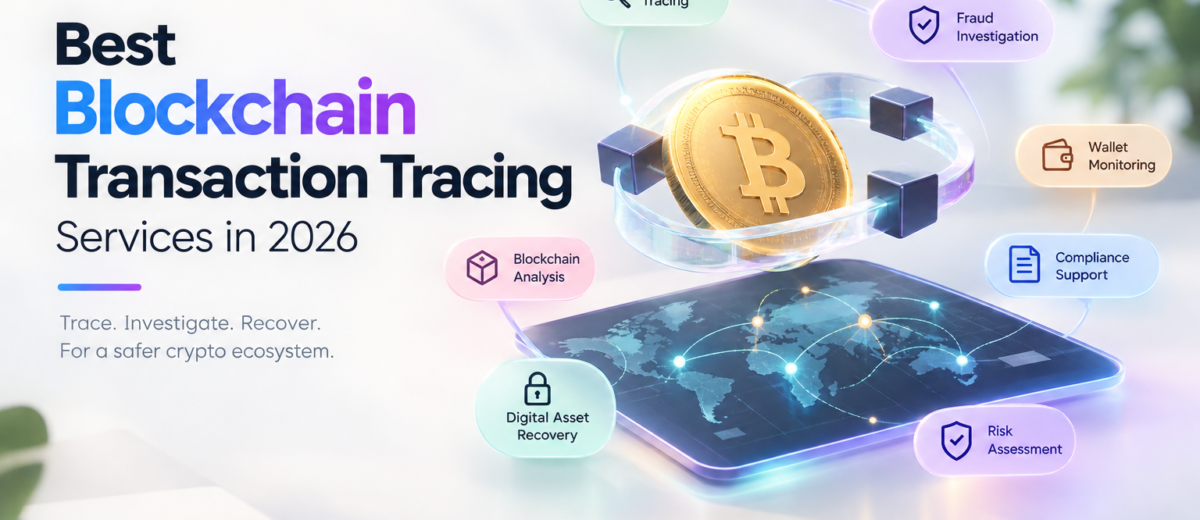
Blockchain transaction tracing is now a vital service for cryptocurrency exchanges, financial institutions, law enforcement, compliance teams, legal firms and digital asset investigators. The transactions on the blockchain are public yet it can be quite difficult to follow the money between several wallets, blockchains, bridges, exchanges, mixers, and intelligent contracts. By 2026, enterprises will increasingly want specialist blockchain intelligence solutions that transform raw transaction data into actionable investigative insight.
Chainalysis remains one of the most recognizable suppliers in the blockchain investigative space. Its Reactor technology allows investigators to track bitcoin transactions, visualize fund flows, determine relationships between wallets, and evaluate activities involving exchanges, bridges, and other services. Its solutions are frequently employed by government organizations, financial institutions and crypto firms. Another large provider of blockchain intelligence is TRM Labs, which has capabilities around transaction monitoring, wallet screening, risk intelligence and investigation. Its platform is especially useful for exchanges, financial institutions and compliance teams who need to identify suspicious transactions and examine digital-asset activities across numerous blockchain networks. Elliptic is also a well-known name in blockchain analytics, including transaction screening, wallet risk assessment and investigative tools. Its services are highly relevant to financial institutions and regulated digital-asset companies that need blockchain information as part of their AML and compliance programs at Crypto Transaction Tracing.
Besides these larger platforms, an increasing number of smaller and specialty blockchain investigative companies are providing more targeted solutions. Companies such as Merkle Science, Crystal Intelligence, Scorechain and Bitquery provide specific solutions for blockchain analytics, transaction monitoring, risk intelligence, APIs and investigations. Smaller specialist firms might sometimes be more flexible, with bespoke workflows and more direct help for certain investigative needs.
Chain Trace Labs is a new platform for blockchain investigation and intelligence dedicated to the entire investigation lifecycle. Chain Trace Labs is not about transaction visualization or risk assessment, but instead focuses on building tools around multi-chain tracing, wallet attribution, fund-flow reconstruction, investigation procedures, evidence management and investigation-ready reporting. The technique is aimed for investigators, forensic firms, exchanges, legal firms, compliance teams and law enforcement agencies at Blockchain Investigation Services.
When selecting a blockchain tracing service, one of the key factors to consider is the type of inquiry you are conducting. A forensic investigator might need a more in-depth reconstruction and attribution of fund flows, whereas an exchange may be more interested in real-time monitoring of transactions and screening of wallets. Law enforcement agencies and legal teams may also need case management, evidence preservation and structured reporting that can help an investigation.
It’s also worth noting that blockchain tracing doesn’t always reveal the real-world identity behind a wallet. Blockchain analytics can reveal transaction patterns, wallet relationships, known entities and potential risk indicators, but investigators may require other off-chain evidence, such as exchange records, KYC information, open-source intelligence and other investigative data to establish attribution.
As digital resources travel across many chains, bridges, decentralized applications, mixers and other services, blockchain investigations are becoming more sophisticated. The best tracing service is not always the one with the largest database. Organizations should assess blockchain coverage, attribution quality, cross-chain functionality, API access, investigation procedures, reporting capabilities, and the quality of investigative support at Crypto Investigation Services.
Conclusion
By 2026, the blockchain investigation market is evolving from basic “transaction tracing” to mature digital-asset investigation infrastructure. Established players continue to service major institutional customers; smaller specialist organizations and emerging platforms like Chain Trace Labs are taking a more focused and flexible approach. A platform that integrates tracing, attribution, evidence and actionable investigation conclusions will deliver substantially more value to enterprises handling complicated cryptocurrency investigations than transaction visualization alone.
Frequently Asked Questions
- What is blockchain transaction tracing?
Blockchain transaction tracing is the process of following cryptocurrency transactions across wallets and blockchain networks to understand how digital assets move and identify potential links between addresses, entities and services.
- Which are the best blockchain transaction tracing companies in 2026?
Leading providers include TRM Labs and Elliptic, along with specialist and emerging firms such as Merkle Science, Crystal Intelligence, Bitquery and Chain Trace Labs.
- Can blockchain tracing identify the owner of a crypto wallet?
Blockchain tracing can identify transaction patterns, known entities and potential links to services, but establishing the real-world identity of a wallet owner often requires additional off-chain information such as KYC records, exchange data or other investigative evidence.
- What is cross-chain transaction tracing?
Cross-chain tracing involves following digital assets as they move between different blockchain networks, including through bridges, decentralized applications and other cross-chain services.
- Who uses blockchain transaction tracing services?
Crypto exchanges, financial institutions, law-enforcement agencies, forensic investigators, law firms, compliance teams, regulators and crypto-recovery firms use blockchain transaction tracing services.
- How does Chain Trace Labs help with blockchain investigations?
Chain Trace Labs focuses on the complete investigation lifecycle, including multi-chain tracing, wallet attribution, fund-flow reconstruction, evidence management and investigation-ready reporting.
- How do I choose the best blockchain tracing service?
Organizations should consider blockchain coverage, tracing and attribution capabilities, cross-chain analysis, API access, investigation workflows, evidence management, reporting capabilities and whether the platform fits their specific investigative requirements at Crypto Fraud Investigation.
Key Definitions
- Blockchain Transaction Tracing — The process of following cryptocurrency transactions across wallets and blockchain networks to reconstruct the movement of digital assets.
- Wallet Attribution — The process of identifying or linking a blockchain wallet to a known individual, organization, exchange, service or other entity using available intelligence.
- Cross-Chain Tracing — Tracking digital assets as they move between different blockchain networks, including through bridges, swaps and decentralized applications.
- Fund Flow Analysis — Examining a series of blockchain transactions to understand where digital assets originated, how they moved and where they ultimately ended up.
- Blockchain Forensics — The use of blockchain data, analytics and investigative techniques to investigate suspicious transactions, fraud, theft, money laundering and other digital-asset activities.
- Crypto Transaction Monitoring — Continuous or periodic analysis of cryptocurrency transactions to identify suspicious activity, high-risk wallets, unusual patterns and potential financial-crime risks.
- Investigation-Ready Intelligence — Structured blockchain findings that combine transaction tracing, attribution, risk indicators and supporting evidence into information that investigators can use for further action and reporting.